

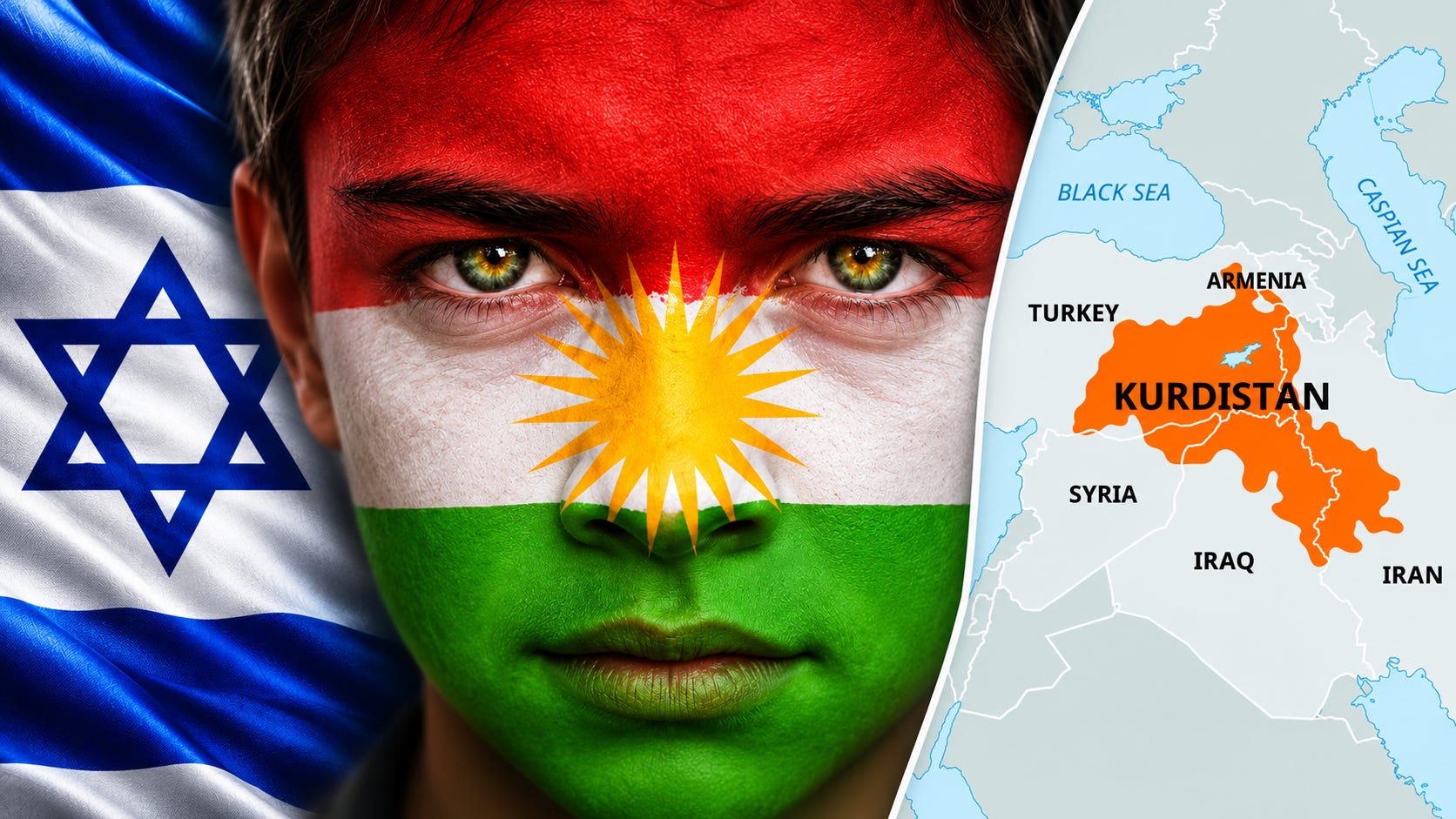
Israel-Kurd Relations in the Middle East Post-October 7
January 2026
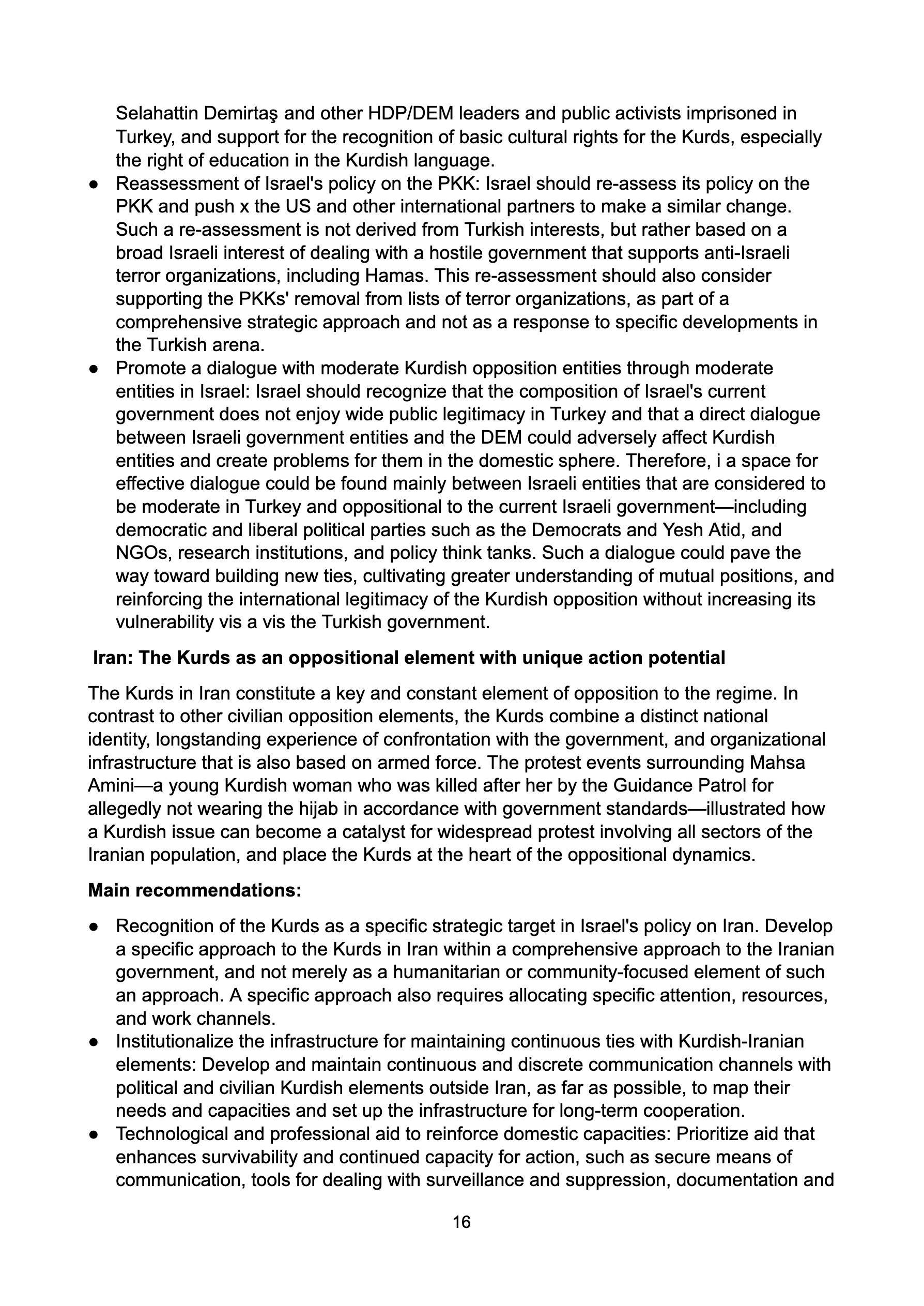
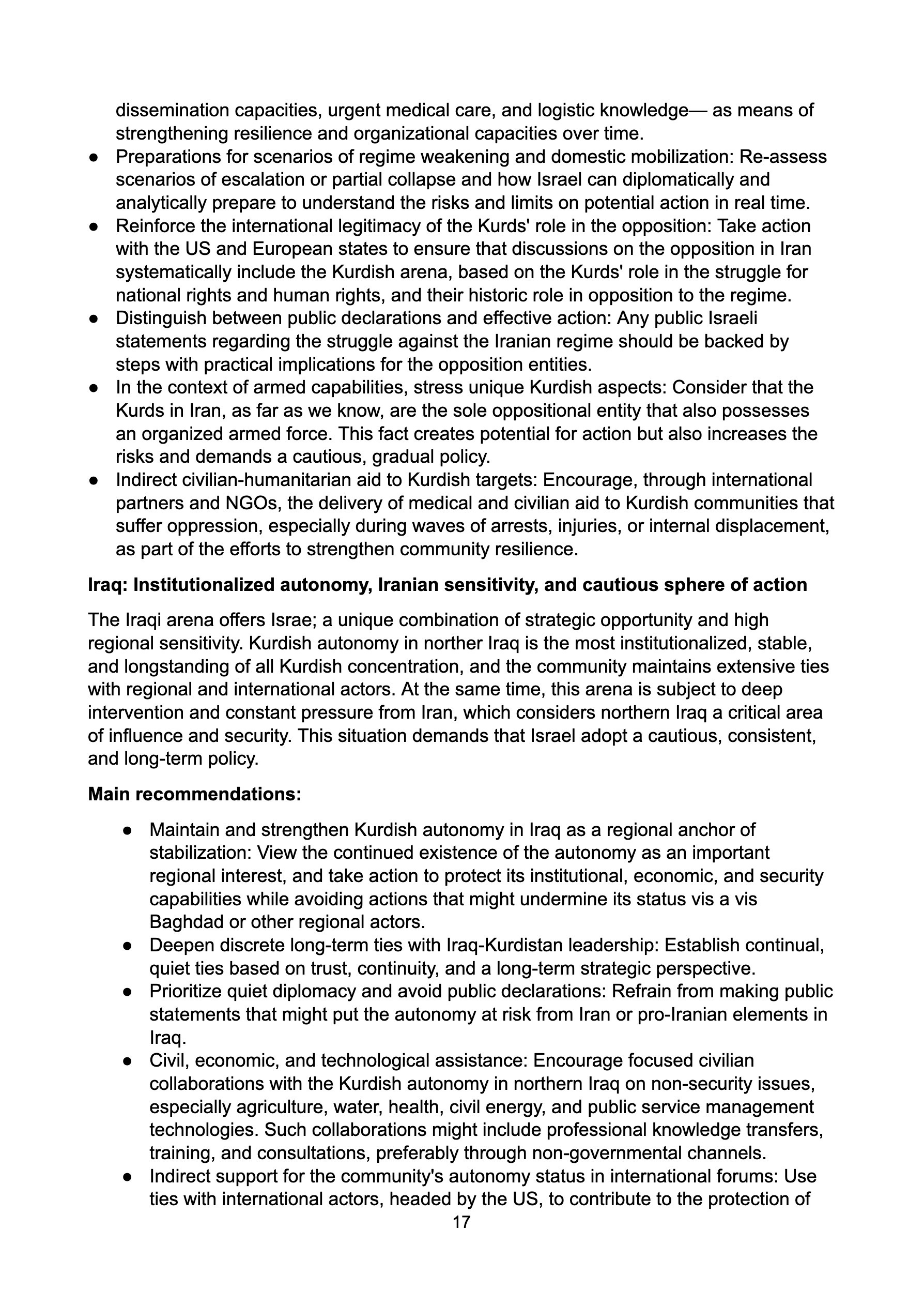
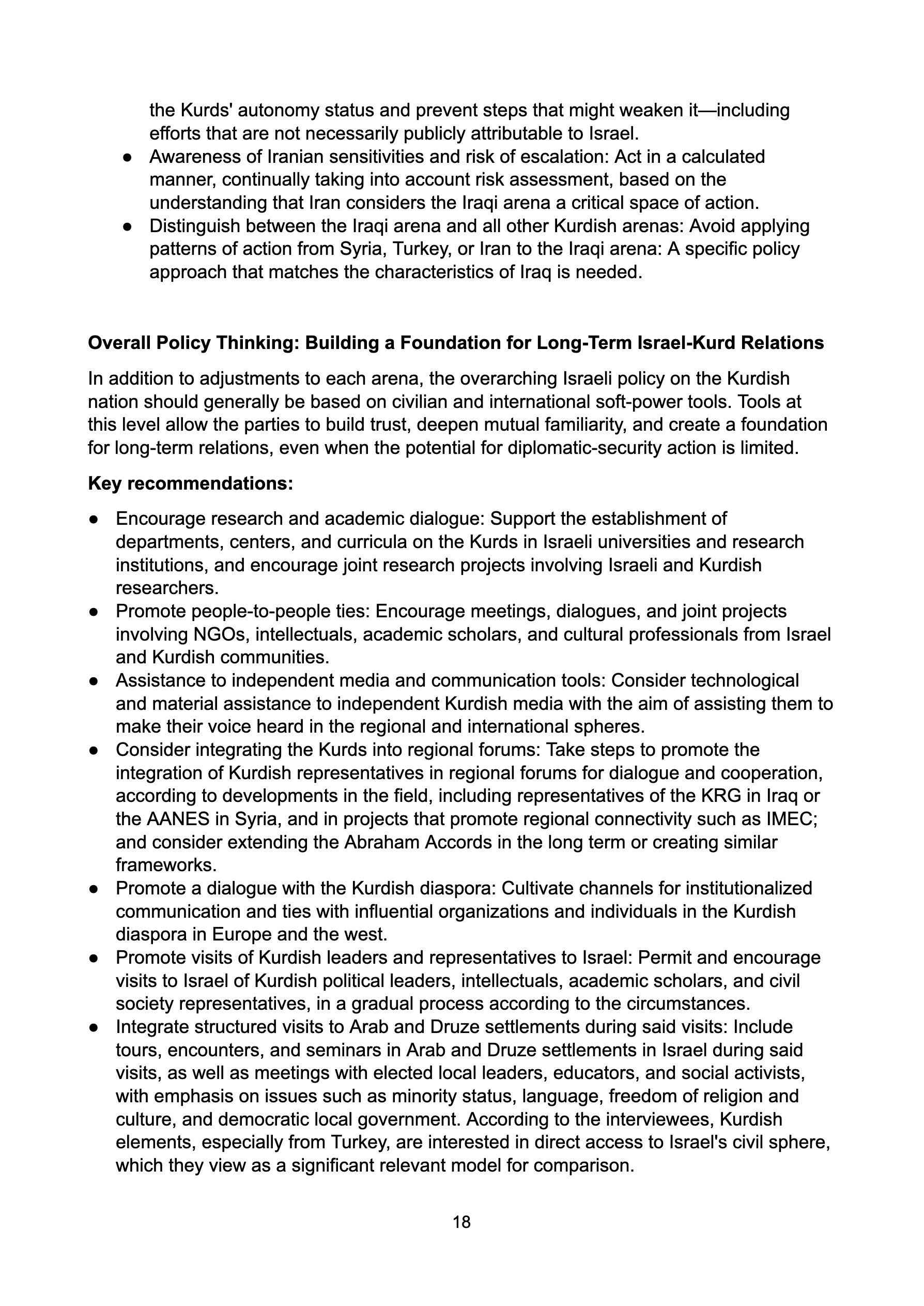
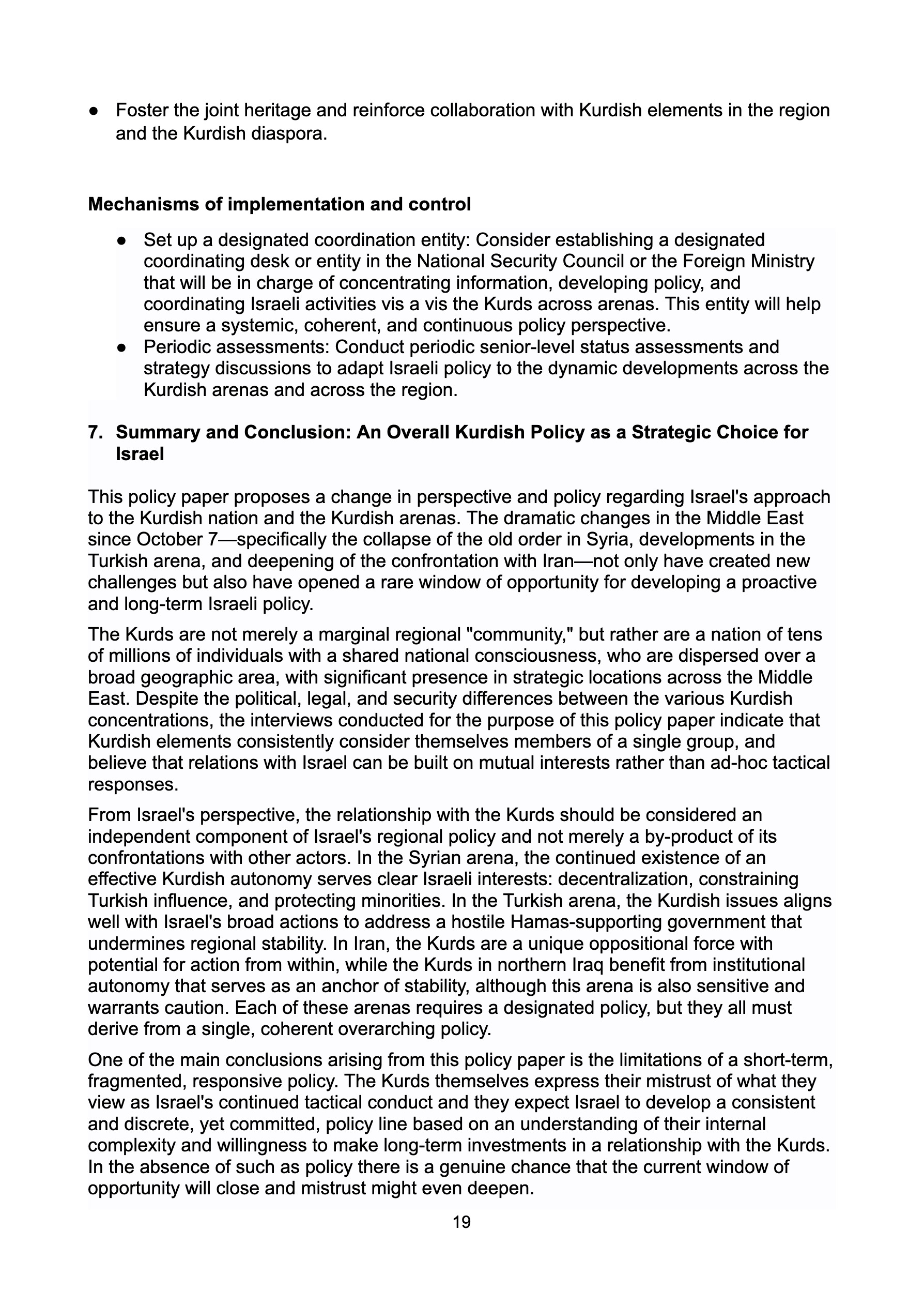
1This policy paper examines the relationship between Israel and the Kurdish nation against the backdrop of the dramatic changes that have taken place in the Middle East since the events of October 7, 2023. The collapse of the old order in Syria, developments in the Turkish arena, and the deepening confrontation between Israel and Iran have created a new regional reality in which the Kurds, a nation of 40 million spread across Syria, Turkey, Iraq, and Iran, have become a significant actor in shaping the regional balance of power. The paper is based on in-depth discussions with senior Kurdish officials and opinion leaders from the four main Kurdish-populated regions and seeks to move beyond an approach that views the Kurds as a collection of separate communities. A consistent theme emerging from these discussions is the perception of the Kurds as a single nation, despite the political and legal differences among their various populations, and the expectation that Israel adopt a comprehensive long-term policy tailored to the different Kurdish arenas.
From Israel’s perspective, its relationship with the Kurds should be viewed as an independent component of its regional foreign policy rather than merely a by-product of its confrontations with other regional actors. In Syria, the continued existence of effective Kurdish autonomy serves Israel’s interests in decentralization, limiting Turkish influence, and protecting minorities. In Turkey, the Kurdish issue is intertwined with efforts to deal with a hostile Hamas-supporting government, while in Iran, the Kurds represent a unique opposition force with the potential for domestic action. This paper was completed shortly before the recent events in northeastern Syria, including aggressive military actions by the al-Sharaa regime against Kurdish autonomy that threaten the community’s very existence. These developments underscore the fragility of the current arrangements in Syria and reinforce the need for a clear Israeli strategy toward the Kurds. The English translation of the original Hebrew memo is being published amid the ongoing war involving the United States, Israel, and Iran, in which the Kurds may once again play a crucial role.
The paper offers a series of practical recommendations for a proactive Israeli policy, combining diplomatic and security measures with civilian, academic, cultural, and other soft-power tools. It is grounded in the understanding that the question is not whether Israel will be compelled to take a position on the Kurdish issue, but how it can do so in a strategic, informed, and effective manner.
THE POLICY PAPER
This policy paper was originally published in Hebrew in January 2026. The English translation of the original Hebrew memo was released amid the war involving the United States, Israel, and Iran, a conflict in which the Kurds could once again play a crucial strategic role. The paper was written by Uri Zaki, a policy fellow at Mitvim – The Israeli Institute for Regional Foreign Policies, where he focuses on Israel-Kurdish relations: https://mitvim.org.il/en/publication/israel-kurd-relations-in-the-middle-east-post-october-7/